From ‘That’s Not My Job’ to ‘I’ll Handle It’ — A Manager’s View on Gen Z, and the AI Variable
Gen Z workplace attitudes are shifting. A mid-career manager breaks down the data, the real change, and why AI may matter more than any generational debate.
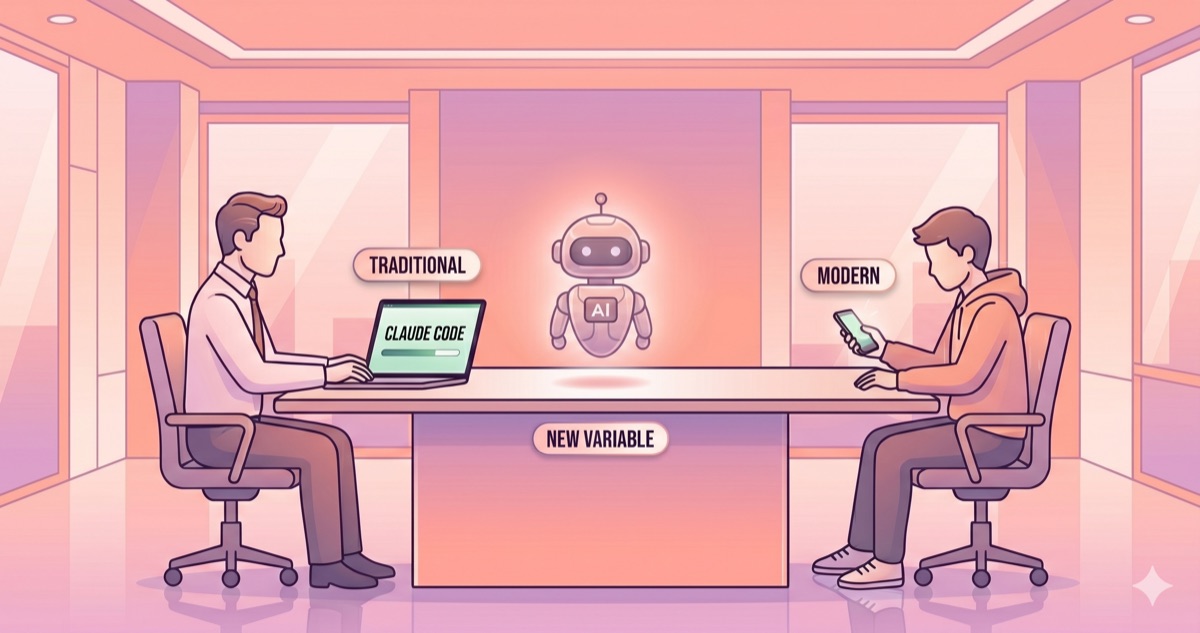
The Gen Z workplace conversation usually starts with anecdotes. "That's not in my job description." "You never taught me that." "It was 5 PM, so I left." As a manager in my 40s, these moments hit differently than any generational gap I'd seen before. I knew younger employees would think differently. I didn't expect the gap to be this wide inside the same office.
But recently, something shifted. And behind that shift, there's a variable nobody saw coming.
What the Data Actually Says About Gen Z at Work
Let's set emotions aside and look at numbers. According to a 2024 Intelligent.com survey, roughly 1 in 6 U.S. companies fired Gen Z hires within months of onboarding. In the same study, about 60% of managers reported having let go of a Gen Z new hire, and approximately 75% of hiring managers said they were dissatisfied with recent graduate hires.
The top reasons companies cited:
- Lack of motivation (50%)
- Insufficient professionalism (46%)
- Poor communication skills (39%)
- Difficulty accepting feedback (38%)
This isn't just an American phenomenon. Japan's "satori generation" shows similar disengagement from corporate ladder-climbing. South Korea's "MZ generation" debates mirror the same global pattern. The Gen Z workplace friction is worldwide. The World Economic Forum explored this in "Gen Z: Unemployable — or our strongest asset?", framing it as a structural challenge rather than a generational flaw.
Something Changed — But Not What You Think
Starting in late 2025, I noticed a shift. New hires became noticeably more cautious. Fewer pushbacks. More "I'll take care of it" responses.
The reasons are layered. The job market froze. By some estimates, about 42% of Gen Z workers in the U.S. are unemployed or underemployed. The viral narrative of "entitled Gen Z employees" started bleeding into actual hiring decisions, making young candidates acutely aware of the stereotype they're fighting.
The result: new hires got careful. But interpreting this as a genuine change in mindset misses the point entirely.
The Core Hasn't Changed
Being cautious isn't the same as thinking differently.
| Area | Gen X Managers (40s) | Gen Z New Hires (20s) |
|---|---|---|
| Work relationship | Organizational commitment | Transactional (give and take) |
| Task scope | "Whatever's needed" | "What's in my job description" |
| Overtime | Sometimes necessary | Personal time violation |
| Feedback response | Criticism = growth | Criticism = possible attack |
| Job tenure mindset | Minimum 2-3 years | Leave if it doesn't fit |
Gen Z got cautious because the economy forced it — not because their fundamental view of work reverted to the Gen X model. "I'll do whatever you say" isn't a heartfelt return to loyalty. It's market-driven adaptation.
If the economy recovers, there's a strong chance the old patterns return. But before that can happen, something entirely different entered the equation.
The AI Variable — Why the Gen Z Workplace Map Just Changed
Here's what I'll admit as a manager: Gen Z's demand for "explain why" isn't wrong. Leadership that explains the reasoning behind decisions is better leadership. I agree with that.
But here's the problem. AI doesn't ask why.
| Factor | Junior Employee | AI (LLM + Automation) |
|---|---|---|
| Onboarding time | 3-6 months | One prompt |
| Repetitive task handling | Errors + learning curve | Instant + consistent |
| Needs "why" explained | Yes | No |
| Emotional management cost | Real | Zero |
| After-hours availability | Labor law limits | 24/7 |
A senior professional with 10 years of experience, equipped with AI tools, can now handle work that used to require two or three juniors. The math is straightforward for companies. And companies run on math, not sentiment.
In a previous series, we covered how to use AI effectively as a personal tool. This post is about the structural shift that tool is creating in the workforce.
How to Avoid Being Replaceable in the Gen Z Workplace
The First Roles to Go
"I only do what I'm told" puts you at the top of the replacement list — whether you're a person or an AI prompt. Repetitive, instruction-based, judgment-free work. AI already does this faster and more consistently than humans.
What's Harder to Replace
Roles that require reading context and making judgment calls still belong to humans.
- Sensing a client's discomfort before they voice it
- Navigating team conflicts with soft skills
- "The data doesn't show it, but experience says this is risky"
- Proposing entirely new frameworks instead of optimizing existing ones
As we explored in the AI custom instructions guide, people who wield AI effectively produce outsized results. The concern is that the gap between "experienced professionals who use AI as leverage" and "new hires who lack fundamentals even without the AI factor" is widening fast.
The Structure Already Changed
Generational friction isn't new. Gen X heard "kids these days" from Boomers. Time always smoothed it over.
This time is different. AI doesn't wait for generational adaptation periods. The Gen Z workplace sits at the intersection of an old problem — generational conflict — and a brand new axis: technology that can do junior-level work without the junior.
No one knows exactly how this plays out. One thing is certain: the way work gets done is changing faster than generations change. And that shift isn't waiting for anyone.