Space Delivery War: What’s the Difference Between SpaceX and Rocket Lab?
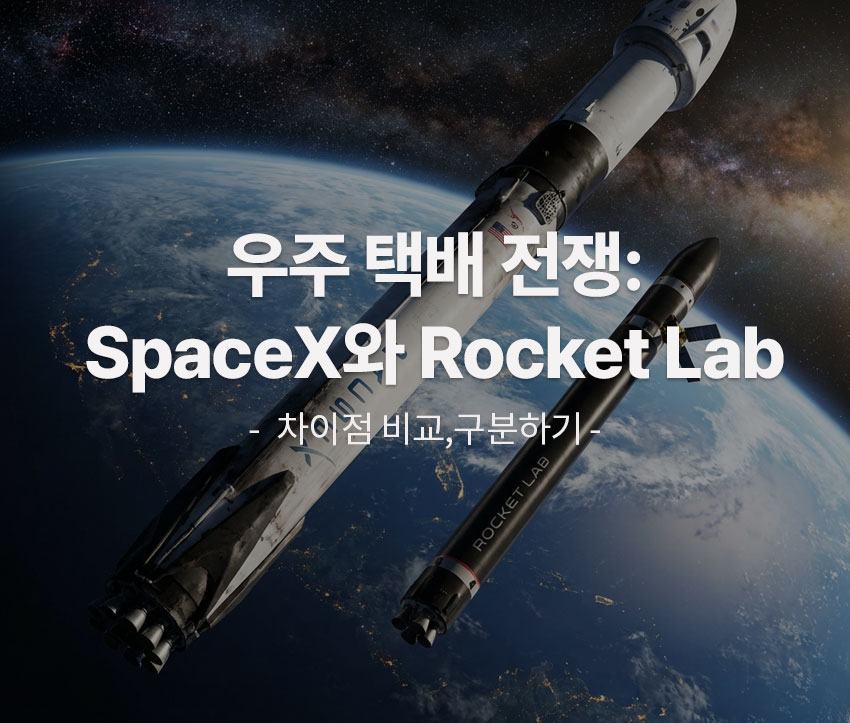
Does it cost $930 million or $100 million to send something to space? SpaceX and Rocket Lab target the space market in completely different ways—like heavy trucks vs. express delivery.
How Much Does It Cost to Send Delivery to Space?
SpaceX Falcon 9: $70 million Rocket Lab Electron: $7.5 million
SpaceX is 9 times more expensive. But the story doesn’t end here. The SpaceX Rocket Lab difference isn’t just about price—their entire strategies are fundamentally different.
SpaceX Is the Heavy Truck of Space
SpaceX’s Falcon 9 carries 22 tons at once. That’s the weight of 15 compact cars.
In 2025, it launched 165 times. That’s once every two days on average. Like a regular freight ship, it departs at scheduled times from Kennedy Space Center.
Who Uses SpaceX?
SpaceX specializes in mass transportation. Its main customers include:
- NASA shipping bulk supplies to the space station
- Launching 60 Starlink satellites at once
- Sending large communication satellites to geostationary orbit
SpaceX’s real advantage is cost-effectiveness. About $3,200 per kilogram. This pricing is possible because the same rocket is reused an average of 10 times or more.
SpaceX’s Revenue Structure
| Category | Details |
|---|---|
| 2025 Launch Count | 165 times |
| Annual Revenue | Approximately $21 billion |
| Starlink Subscribers | 9 million |
| Main Revenue Source | Starlink satellite internet (70% of total revenue) |
Starlink is SpaceX’s core revenue driver. As of December 2025, subscriber count exceeded 9 million. With monthly fees around $90, this generates approximately $15 billion in annual revenue.
Rocket Lab Is the Express Delivery of Space
Rocket Lab’s Electron carries only 300kg at once. About two motorcycles worth.
It might seem like no competition, but they’re actually targeting completely different markets.
What If You Need to Launch a Small Satellite Quickly?
Imagine you need to send your small satellite to space. It weighs 50kg.
If you choose SpaceX rideshare:
- Cost: About $2.3 million (sharing with other customers)
- Wait time: 6 months or more (until other cargo is collected)
- Orbit: Where SpaceX decides (may not be your desired location)
If you choose Rocket Lab dedicated launch:
- Cost: $7.5 million (dedicated launch)
- Wait time: 3 weeks
- Orbit: Your exact desired location
Rocket Lab CEO Peter Beck says: “We’re not competing with SpaceX. We’re doing what they’re not doing.”
Who’s Actually Doing Better?
Comparing Both Companies’ 2025 Performance
| Category | SpaceX | Rocket Lab |
|---|---|---|
| Launch Count | 165 times | 21 times |
| Annual Revenue | Approximately $21 billion | Approximately $800 million |
| Success Rate | Over 98% | 100% |
| Stock Price Increase (1 year) | Not public | Over 200% |
By numbers alone, SpaceX is overwhelming. But Rocket Lab is the absolute leader in its niche market.
Real Case: What If You Need an Emergency Launch?
In 2023, the U.S. Department of Defense urgently needed to launch a small satellite for North Korean missile tracking.
Did they ask SpaceX? No. They went with Rocket Lab.
The reason is simple:
- 300kg small satellite
- Launch needed within 3 weeks
- Precise polar orbit entry required
This is the value of express delivery.
In December 2025, Rocket Lab signed an $816 million contract with the U.S. Space Development Agency. They weren’t chosen just because they’re cheap. It’s because they’re fast and accurate.
2026: The Game May Change
SpaceX’s Potential IPO
Market speculation suggests SpaceX may pursue a stock market listing in 2026. Elon Musk has not denied this possibility. The expected company valuation is $1.5 trillion—over three times Samsung Electronics’ market cap.
An IPO means initial public offering. It means putting SpaceX shares, which until now only Elon Musk and early investors could own, on the stock market for regular people to buy.
Musk has refused to go public for 23 years since founding SpaceX in 2002. He maintained his position that he wouldn’t go public before going to Mars. His reasoning was that if shareholders pressured for quarterly results, he couldn’t pursue the long-term Mars colonization project.
So why is a 2026 listing being considered? Because Starlink started making money reliably. Now they can prove profitability. However, Musk’s final decision hasn’t been made, and there’s also a possibility the listing won’t proceed.
Update (June 2026): SpaceX has confirmed a Nasdaq listing on June 12, 2026, under the ticker SPCX. Reported target market capitalization is around $1.75 trillion, placing it just behind Apple and Nvidia. The targeted raise of roughly $75 billion would be about 2.5 times the 2019 Saudi Aramco record. Musk’s reported ownership is about 42% equity and roughly 85% of the vote.
Rocket Lab’s Neutron Rocket
Rocket Lab plans to launch its Neutron rocket for the first time in early 2026. It’s a 13-ton class. Half of SpaceX’s Falcon 9, but priced at $55 million.
Why does this matter? Until now, it was either $70 million or $7.5 million—two extremes. Now there’s a $55 million middle option.
Update (June 2026): Following Blue Origin’s New Glenn explosion on May 28, which damaged Launch Complex 36 and froze a 24-launch Amazon Leo manifest, the medium-payload demand that would have flowed to Blue Origin is increasingly likely to look toward Neutron as the credible second runner alongside SpaceX. The middle-pricing position Rocket Lab built becomes more strategically valuable when the duopoly assumption breaks.
2026 Update: After the Blue Origin Setback
On May 28, 2026, Blue Origin’s New Glenn rocket exploded during a static fire test at Launch Complex 36 at Cape Canaveral. No one was injured, but the rocket, transporter-erector, and lightning tower were destroyed, and the pad itself sustained structural damage. NASA Administrator Jared Isaacman has publicly acknowledged that restoration of LC-36 may not arrive until 2028.
That shifts the Rocket Lab vs SpaceX comparison in three concrete ways.
- SpaceX gains short-term leverage. With Blue Origin’s only New Glenn pad offline, Falcon 9 and Starship demand tilts further toward SpaceX. Pricing power and schedule leverage follow.
- Rocket Lab moves up the credibility ladder. Neutron, originally positioned as a medium-payload third option, becomes the most visible non-SpaceX alternative for the 2027 to 2028 window. The 13-ton class and $55 million price point fit a gap the market needs to fill.
- NASA Artemis leans harder on SpaceX HLS. Blue Moon, Blue Origin’s lunar lander, shares engineering resources with the New Glenn program. Artemis III had already been pushed to 2028, and a longer Blue Origin pause raises the probability of additional slips.
The bigger reading is that the “SpaceX vs Rocket Lab vs Blue Origin” three-horse framing for 2026 has effectively narrowed to two for now. For a fuller view of what changes in the broader US space industry after this event, see our coverage of what the Blue Origin explosion changed and didn’t change.
Three Things You Need to Know
It’s Collaboration, Not Competition
SpaceX and Rocket Lab target different markets. Like supermarkets and convenience stores. Both are necessary.
Space Is No Longer Just for Elites
Ten years ago, you needed a nation to launch a satellite. Now even small and medium-sized companies can do it. Thanks to Rocket Lab.
Korea Is Jumping In Too
Korean startups are also making small satellites. There’s Nuri-ho, but private launch services like Rocket Lab might be faster.
Closing
The key point of this story isn’t who wins. It’s how close space is getting to us.
Twenty years ago, a space launch cost hundreds of millions of dollars. Ten years ago, SpaceX lowered it to around $100 million. Now Rocket Lab has lowered small launches to $7.5 million.
What’s next? A world where even your small idea can go to space.
Just as heavy trucks and express delivery coexist, SpaceX and Rocket Lab each go their own way. And on that path, space is gradually coming down to us.
Understanding the SpaceX Rocket Lab difference isn’t just about comparing two companies. It’s a window into how the private space industry is evolving.