Fallback Case Studies — 7 Outage Scenarios from Netflix, Spotify, and Kakao
Seven fallback case studies — Netflix, Spotify, Google Maps, YouTube, plus the AWS S3 2017 and Kakao 2022 outages. Same pattern, very different shapes.
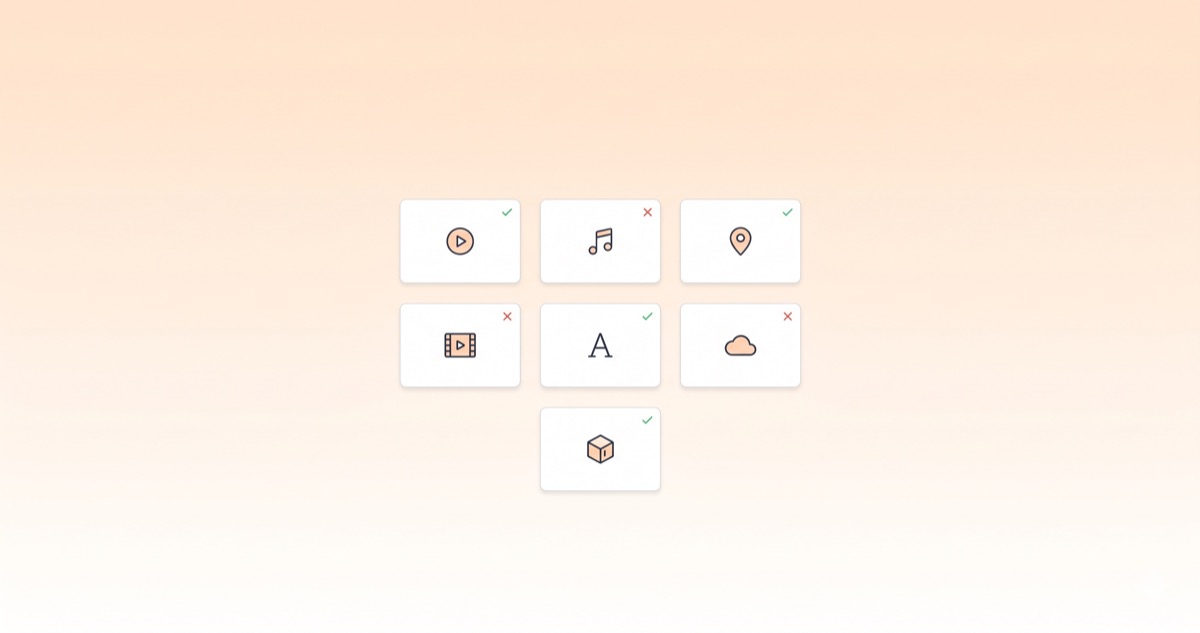
Safety Nets That Hold, Safety Nets That Collapse
The previous post covered why fallback has become essential again. The natural follow-up: how does it actually work, and how does it fail? These fallback case studies put five well-built safety nets next to two that collapsed, and look at what pattern shows up — and what one missing detail looks like when it goes wrong.
Here are the seven cases at a glance.
| Case | Fallback mechanism | Outcome |
|---|---|---|
| Netflix recommendations | Hystrix circuit breaker → popular content | Success |
| Spotify Offline Backup | Offline detection → cached recent tracks | Success |
| Google Maps offline maps | Pre-downloaded area + GPS → basic navigation | Success |
| YouTube ABR streaming | Throughput drop → lower bitrate auto-switch | Success |
Web font font-display: swap | Late font → instant fallback font | Success |
| AWS S3 2017-02-28 | Status page sat on the same S3 | Failure |
| Kakao 2022-10-15 | Failover system sat in the burning data center | Failure |
Successful Fallbacks — Users Never Notice
1. Netflix Recommendations — The Home Screen Never Goes Blank
When a recommendation microservice fails or slows down, Netflix's Hystrix circuit breaker stops calling it and returns a predefined fallback: a non-personalized row of popular content. One model going down does not leave the home screen empty. From the user's side, the only difference is "today's picks feel a little more generic than usual." It is the cleanest illustration of the rule "if a fallback is working, users do not see it."
2. Spotify Offline Backup — Music Keeps Playing Without Connectivity
Spotify rolled out Offline Backup starting October 2024. When the device goes offline, the app uses what it already caches and automatically surfaces a playlist of recently played and queued tracks. Users do not need to manually download anything in advance — their normal listening pattern becomes the offline fallback. Cache size puts a ceiling on how much it can hold, but it covers the most common failure mode — losing signal on the subway — without the service stopping.
3. Google Maps Offline Maps — Directions Work Without a Signal
Google Maps keeps basic turn-by-turn directions running on pre-downloaded map tiles plus the device's GPS. Live-data features like traffic and alternate routes drop out, but the most important use case — driving — keeps working. Offline maps expire after about thirty days, and the route must stay inside the downloaded area. It is also a good example of a fallback that explicitly tells the user "you are in a reduced mode right now."
4. YouTube ABR — Playback Holds Even on a Narrow Pipe
YouTube encodes every video at multiple bitrates (240p, 360p, 720p, 1080p, 4K) and splits each into 2–10 second chunks. The player watches network conditions in real time and, the moment the buffer drops below threshold (usually 5–10 seconds), requests lower-bitrate chunks. "Quality dips for a moment" is a much smaller hit to the user than "playback stalls" — that judgment runs through the whole design. On mobile, 360p effectively acts as the bottom fallback tier. The same logic shows up in hybrid AI routing — when the cloud is reachable, requests run on the cloud LLM, otherwise they fall to the on-device SLM.
One Line of Fallback, Big Difference
5. Web Fonts with font-display: swap — Letters Show Even When Fonts Are Late
A one-line CSS fallback with outsized impact. Until the web font arrives, the browser shows text immediately in a fallback system font (FOUT — Flash of Unstyled Text), then swaps once the custom font loads. With the default (auto or block), the page sits in FOIT — Flash of Invisible Text — and users see a blank space. A fallback font chain at the end of font-family, paired with font-display: swap — two lines that change perceived performance dramatically.
Failed Fallbacks — Same Lesson, Two Companies
6. AWS S3 2017 — The Status Page Sat on the Same S3
On February 28, 2017, an AWS engineer debugging the S3 billing system entered a command with the wrong parameters, unintentionally taking down core S3 subsystems. The US-EAST-1 region went down for about four hours, and a large slice of the internet shook. The more painful detail: the AWS Service Health Dashboard itself depended on S3, so Amazon could not even show the outage notice. The official AWS post-mortem and the industry retrospectives that followed land on the same lesson — if your fallback path sits on the same dependency as the primary, it is not a fallback.
7. Kakao 2022-10-15 — The Failover System Sat in One Data Center
On October 15, 2022, a fire at the SK C&C Pangyo data center took down many of Kakao's services for an extended period. According to Kakao's own statement, data was duplicated across data centers, but part of the system that performs the failover only existed in the Pangyo data center. Automatic failover did not trigger, and recovery dragged on through manual work. Kakao's follow-up apology promised redundancy across the full stack and committed to multiplying infrastructure investment in the years ahead. The wording differs from the AWS case, but the lesson is identical — redundancy that sits on a single point of failure is not redundancy.
Four Patterns Pulled from the Seven Cases
The line between the five successes and the two failures is easier to see as a table.
| Pattern | What the successes got right | What the failures missed |
|---|---|---|
| Fallback independence | Sits on a different dependency than the primary | Sat on the same system or same location |
| Automatic trigger | Fires the moment the signal degrades | Auto failover did not trigger, manual recovery only |
| Quality of the result | Delivers a meaningful "reduced mode" | Nothing reaches the user |
| Visibility and observability | Firing rate is tracked as a metric | Could not even surface the outage notice |
The first row is the heart of it. The real question is not "does a fallback exist?" but "does the fallback sit on a different dependency than the primary?" Both AWS and Kakao had fallbacks. They just lived on the same ground that the primary stood on, so they fell together.
A Well-Built Safety Net Stays Invisible
Across these seven cases, a fallback wears two faces. When it works, almost no user sees it. When it collapses, every user sees it at once. That is why fallback design is hard to evaluate on a normal day — and decisive on the day everything matters.
If you are a product manager, take every critical flow and ask "what reaches the user if this fails?" If you are an engineer, take one more look at whether the fallback code sits on the same infrastructure and the same dependencies as the primary path. The four design points from the previous fallback post become much more concrete once you walk them through these seven cases.
A well-built safety net stays invisible. The fact that it stays invisible while quietly holding users up every day is exactly what makes it the most expensive line of code in the codebase.