Forty Lines and I Still Don't Know What You Want — Work Email Etiquette for Requests and Replies
Some emails have perfect attachments and still leave you asking what exactly you're supposed to do. Put the ask first and the background last, and when a reply is going to be late, send the lateness before the reply. Work email etiquette from both ends.
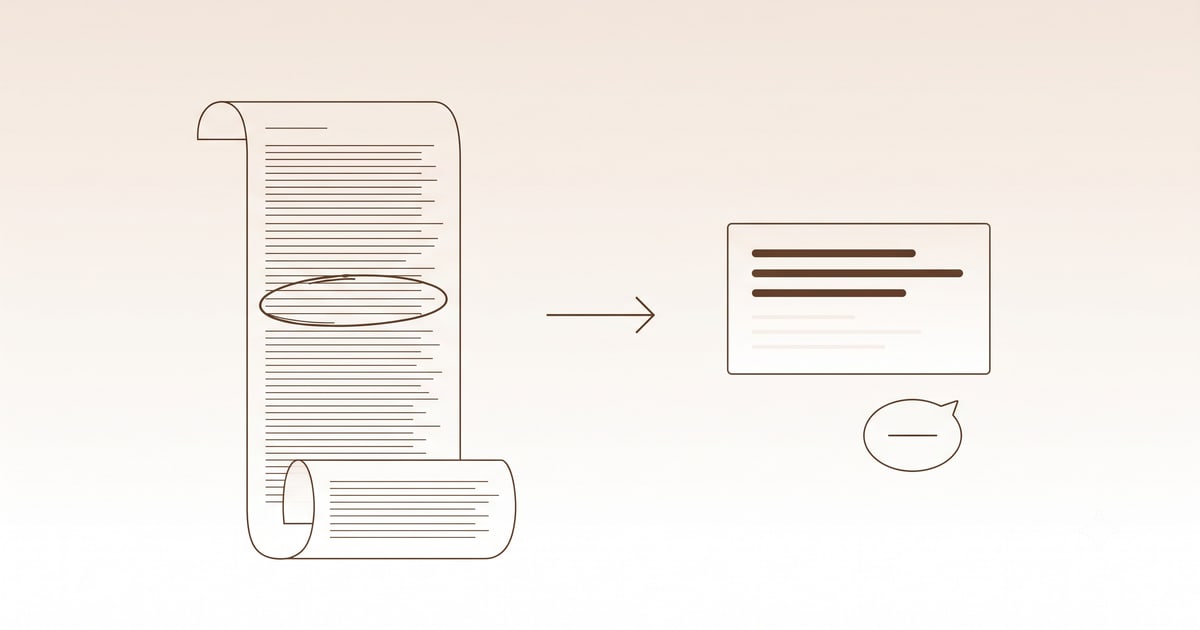
The younger colleagues joining my company write good email. The tone is polite, every supporting document is attached, the context is laid out conscientiously. And yet, forty lines in, I sometimes finish reading and think: so what is it you want me to do?
It isn't a lack of information. The information is all there. The problem is that the reader has to infer the request out of it. Multiply that inference cost across an organization and it stops being a style question. A previous post covered how to write the thing. This one treats work email etiquette as one full cycle: the request, and the reply.
Why a Forty-Line Email Hides Its Ask
People write in the order they thought it through. How the work started, what they checked, what they concluded. It's chronological and it's honest — this is what care looks like, not carelessness.
The trouble is that the reader's order is the reverse. Someone opening fifty emails a day decides, for each one, is this mine, by when, and does it have to be now. If the information that answers those three questions sits on line 35, the first 34 lines are an obstacle to that decision.
| The writer's order | The order the reader needs | |
|---|---|---|
| 1 | Background — how this started | The ask — what do you want from me |
| 2 | History — what was checked | The deadline — by when |
| 3 | Evidence — here are the documents | Background — why it's needed |
| 4 | Conclusion — so here's my request | Documents — what to read to do it |
Nothing in the content needs to change. Only the order.
Write the Request Backwards — Ask, Background, Attachments
Put everything in the first three lines
The three lines visible when the email opens carry the ask, the deadline, and what's needed. Background goes underneath. Attachments and links go last.
Request: please issue two test accounts for the payment module. Deadline: by Wednesday, October 8 — integration testing starts on the 9th. From me: purpose and owner details are in the table below.
(Background) At the last meeting we agreed phase 1 opens test payments only …
Those three lines are enough for the reader to conclude "mine, Wednesday, ten minutes." The background still reads fine after that decision, not before it.
Put a verb and a date in the subject line
[Request] Payment module test accounts — by 10/8 sorts itself in the inbox before anyone opens it. Question about the payment module can only be sorted by opening it.
And if the email is turning long, that's often a sign it isn't email work. If you expect three round trips, a 15-minute call is faster — then email the outcome.
On the Receiving End — Send the Delay Before the Reply
Sit on a request for a month and then reply out of nowhere, and the other person will be annoyed. But the annoyance isn't really about lateness. It's that for a month they couldn't plan anything. The person waiting has to guess alone: is it coming, was it forgotten, should I find another route?
Work slipping is ordinary and usually forgiven. Silence isn't.
One line does it
It doesn't have to be a formal reply. A line in chat is plenty.
Got your request. This week is tight because of month-end close — I'll come back to you by Tuesday.
That line changes the other person's week. Now they can decide whether to wait, route around you, or move their own date.
| Situation | What to send within 24 hours |
|---|---|
| Quick to handle | Just handle it, then "done" |
| Needs time | When you'll reply — with an actual date |
| Not your area | Name the right owner, or forward it and say you did |
| Can't be done | Say so now, not later — with an alternative or a condition |
That last row is the hard one. A refusal postponed stops being a refusal and becomes an incident. How to phrase it is in the deadline negotiation post.
One principle covers it: the work can be late; the acknowledgment can't.
Two Places AI Earns Its Keep
- Before sending: "In one sentence, what am I asking this person to do?" If no single sentence comes out, the reader won't find one either. That's not a writing problem — you haven't decided on the ask yet.
- After receiving: collapse long emails with "pull out only the request, the deadline, and what I have to do." It's the same move as splitting meeting notes by audience.
Two cautions. Letting an AI write the whole email usually makes it longer — use it to cut, not to draft. And keep client names, contract amounts, and personal contact details out of it; roles and conditions summarize just as well.
Wrapping Up
- A forty-line email doesn't fail on information, it fails on order. Ask, deadline, what's needed in the first three lines; background and attachments after.
- A verb and a date in the subject line let people sort before opening. More than three round trips means it was a call all along.
- Late replies annoy people because of the silence, not the delay. The work can be late; the acknowledgment goes out within a day, with a date on it.