Why Does Changing One Rule Mean a Full Deploy? The Closed-Loop Fix
Changing one rule shouldn’t mean editing code and redeploying every time. Here is how a closed-loop design removes that busywork — three pillars and the trade-offs.
The Wall You Hit as a System Grows
Once a system you operate grows past a certain size, you keep running into the same frustration: "Why does changing a rule or a threshold take this much work?" To roll out one new policy, you edit code, build, deploy, and reconcile versions across every client — and by the end, the thing you actually wanted to change was a single small value, but the work was a mountain. This is the exact pain that closed-loop systems are built to remove.
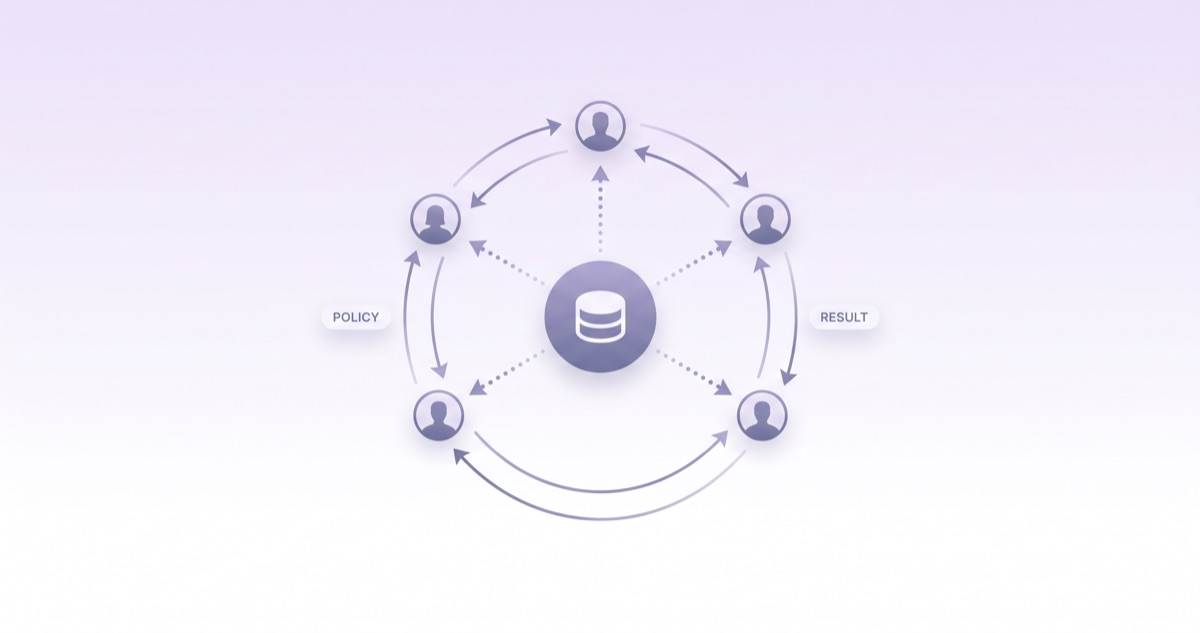
One structural way to solve this is the closed-loop systems approach. It sounds grand, but the core is three things: ① manage the rules centrally, ② ship those rules to the edge as data, dynamically, and ③ feed the results back to the center to drive improvement. Let me walk through why each one helps.
The Three Pillars of Closed-Loop Systems
In one line, closed-loop systems mean: keep the policy as data at the center, and feed the results back through a loop. It is the feedback loop from control engineering, applied to an operational system. The loop only truly closes when these three pillars turn together.
| Pillar | One-line definition | Payoff |
|---|---|---|
| Central control | One place to change things | No-downtime rollout, consistency |
| Dynamic config | Policy as data, not code | Context fit, extensibility |
| Feedback | Results loop back into the next action | Timely response, continuous improvement |
1. Central Control — One Place to Change Things
Keep rules, criteria, and thresholds as data in a central store rather than in code. Three things follow.
- No redeploy. Changing a policy does not mean reinstalling clients. It takes effect live, with no downtime.
- Consistency is guaranteed. Every node and every user always runs the same rule. The "only that one machine is on the old rule" class of incident disappears.
- Ownership separates cleanly. The business side manages the rules; engineering owns only the engine. The bottleneck for change moves from engineering to operations, which aligns speed with responsibility.
Having a single source of truth lowers maintenance cost substantially over the long run.
2. Dynamic Config — Policy as Data, Not Code
The popular framing today is config-as-data, or policy-as-data. Instead of hardcoding rules, you keep them as settings read at runtime. Go one step further and you can dynamically compose different rule sets per context.
- Context fit. Apply a different bundle of rules depending on the target, the situation, or the tier — on the fly. This removes the bluntness of "one rule for everyone."
- Extensibility. When a new case appears, the engine stays untouched and you just add config. Coverage grows without code changes.
- Transfer efficiency. Rather than downloading everything each time, diff by version and sync only what changed, saving network and startup cost.
The key is separating "what to do" (policy) from "how to do it" (engine). That separation keeps the system flexible and simple at the same time.
3. Feedback — Processing Once Is Not the End
This is the essential part. Results are fed back to the center and shape the next action. This is exactly where the loop closes.
- Timely, not after the fact. When results return quickly, you learn about a problem at the moment you can still fix it, not long after.
- Continuous improvement. Accumulated results become material for aggregation and analysis, which in turn becomes the basis for refining the rules. The system gains a structure for improving itself.
- Easy to trace and audit. Keeping results as history lets you reproduce and verify "why was it handled that way back then."
A system without feedback, however sophisticated, is just a pipe flowing one way. The moment the loop closes, operations become an organism that can improve.
When It Fits Well
Not every system needs a closed loop. It earns its keep in environments like these.
- Domains where rules and policy change often (regulations, rates, quality standards)
- Cases where the rule must differ per target
- Operations where you want to roll results into metrics and improvement
Conversely, if rules almost never change and the target is uniform, there is little reason to take on the extra management cost of closing the loop.
It Is Not Free — The Trade-offs
To be honest, this structure has a cost too.
- Version-management complexity. The moment config becomes data, you have to track "which version processed this." If the result survives but the original rule text does not, full reproduction is hard.
- Observability burden. Because it is dynamic, "which rule is in effect right now" is not visible from the code alone. Logging and dashboards have to back it up.
- Governance. It is dangerous if anyone can change the central rules. You need change permissions, history, and an approval process.
In other words, you gain flexibility but take on more to manage. That is why it pays off most in systems past a certain size and rate of change. On the observability point, this ties straight into something the post on fallback design stressed — you have to put the "fallback firing rate" on a metric. The more dynamic the system, the more you must surface what is happening inside it.
It Lines Up With the Current Trends
This pattern fits today's direction well. Config-as-data such as remote config and feature flags, closed-loop automation in operations, human-in-the-loop that inserts human review into automated processing, and the orchestration and compound systems that chain multiple stages — they all share the same skeleton: manage policy as data at the center, and feed results back to improve.
The skeleton gets even sharper once AI is in the mix. Putting "which model, which criteria" into central config, and dropping to another path when a response cannot be reached, overlaps exactly with the picture in the earlier hybrid AI routing post. The moment you feed results back to refine the next routing decision, that system becomes a closed loop too.
Wrapping Up
The appeal of closed-loop systems comes down to "easy to change, fits the context, improves itself." Central control means less manual work, dynamic config means flexibility, and feedback means improvement compounds. Yes, versioning, observability, and governance come along as homework — but for a system that changes often and wants to connect results to improvement, it is a price well worth paying.
In one line: keep policy as data at the center, and feed results back through the loop.